The Shifting Landscape
Crystal skulls occupy a strange space in the market. Part artifact, part art object, part spiritual tool — they defy easy categorisation. And that ambiguity is exactly what makes them valuable.
What was once a niche curiosity for collectors has become a core inventory category for retailers, a go-to gift for premium buyers, and a legitimate asset class for investors.
The numbers tell the story. The global crystal products market was valued at $8.9 billion in 2025 and is projected to reach $13.6 billion by 2035, growing at a 4.4% CAGR. Within that, the healing and wellness crystal niche — which includes skulls — is expanding at an even faster 11.15% CAGR from a ~$130 million base in 2026.
Crystal skulls are capturing an outsized share of that growth. Here's why.
From Collectible to Premium Gift
The shift is structural. Consumer preferences have moved decisively toward premium, artisanal, and design-led lifestyle goods, with discretionary spending increasingly directed toward home aesthetics and expressive interior styling.
Crystal skulls fit this trend perfectly. They're not functional objects — they're statements. A well-carved skull on a shelf signals taste, individuality, and a connection to something older than the buyer.
This is reflected in the gift market. The global gifting economy has expanded materially, with crystal products occupying a prominent position in both consumer and corporate gifting occasions. Corporate gifting, in particular, is a structurally growing segment as organisations invest in branded gifting programmes across employee recognition and client retention.
The r/Crystals discussion about ethical sourcing wasn't really about ethics. It was about trust — and trust is what justifies a premium price. Customers will pay more when they believe in the story behind the stone.
The Value Ladder
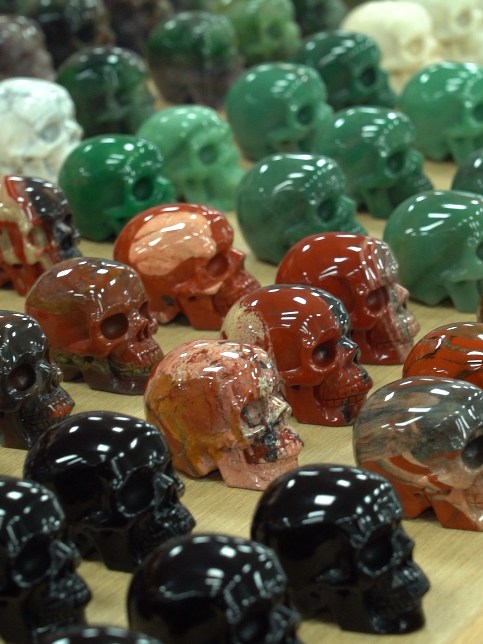
Crystal skulls span an enormous price range. That's not a bug — it's a feature. It means there's a skull for every buyer type.
At the entry level, a 2.5cm clear quartz skull retails for around $8, with wholesale at $4. These are impulse buys — low barrier, high turnover.
Move up to 3.5–5cm clear quartz, and wholesale jumps to ~$9.90, retail around $18. Still under the $20 psychological barrier, but with better margins.
At the collector tier, clear quartz skulls typically range from $350 to $385 based on recent sales, with larger specimens commanding higher valuations. A hand-carved citrine skull of 9x7cm can reach €468. A 13x10cm rock crystal skull: €699.
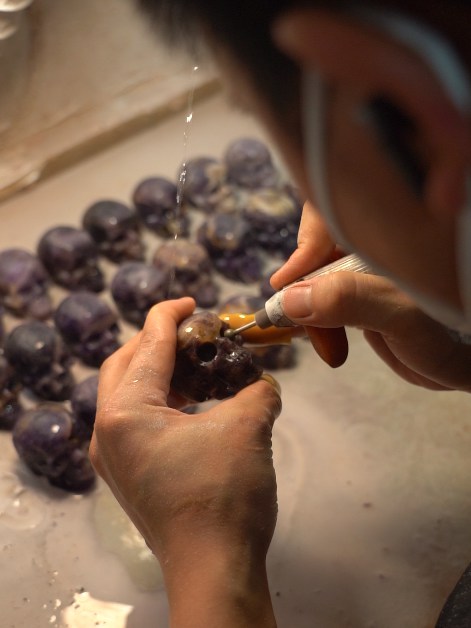
At the very top, master carvers command extraordinary premiums. The world's largest crystal skull, owned by master carver Leandro, is currently offered for sale at $100,000–$150,000. A double amethyst skull by Chinese master carver Kitty Wong — requiring over 120 hours of work — is priced accordingly.
The price isn't in the stone. It's in the skill.
What's Driving the Market
1. The Carving Explosion
At the Tucson Gem Show 2025, carvings exploded — not just standard animals and skulls, but a wave of political and meme-inspired pieces. The fact that online trends are now shaping the carving market says a lot about where the industry is headed.
2. The Wellness Connection
Crystals have moved from metaphysical shops to mainstream wellness. The healing crystal vertical is projected to grow from ~$130 million in 2026 to $330–350 million by 2035. Skulls are a key part of that — they're visually striking, materially unusual, and symbolically loaded.
3. The Collector Base
Serious collectors are becoming more discerning. They're not buying mass-produced pieces — they're looking for craftsmanship, individuality, and presence. Natural variations, tool marks, and even repairs are part of what makes hand-carved skulls distinctive.
4. The Premium Gift Channel
Corporate gifting and high-end consumer gifting are adopting crystal skulls as statement pieces. The medium price segment — appealing to aspirational households, corporate gifting buyers, and hospitality operators — held a 47.6% share in 2025 and is growing at a 3.9% CAGR.
The Bottom Line
Crystal skulls are no longer a niche product. They're a multi-tier category that spans impulse buys, serious collecting, and premium gifting.
The global crystal products market is projected to reach $13.6 billion by 2035. North America holds the largest regional share at 42%. The United States leads overall demand, with premium gifting continuing to outperform broader discretionary spending categories across economic cycles.
For retailers, the opportunity is clear. Stock across the value ladder — entry-level mini skulls for turnover, mid-tier carved pieces for margin, and the occasional master-carved piece for show. For collectors, the question isn't whether to buy. It's when.
The market is growing. The buyer base is expanding. And the skulls aren't getting any less fascinating.If you need a custom batch of crystal skulls, contact us and we’ll provide the perfect solution.


 English
 Français
 عربي
عربي Deutsch