The Post That Started This
“Is the industry dry for everyone?”
That question on r/Crystals got hundreds of comments. Retailers complaining about slower foot traffic. Shop owners wondering if they should close. The general vibe: everything is falling apart.
I run a crystal carving factory. I see the order books every day. And I’m here to tell you — the industry isn’t dead. It’s just different.
Here’s what the data actually says.
The Big Picture: Still Growing
Let’s start with the macro numbers. The global crystal products market was valued at $8.9 billion in 2025 and is projected to reach $13.6 billion by 2035, growing at a 4.4% CAGR. For 2026 specifically, the market is estimated at $9.3 billion.
That’s not a dying industry. That’s a maturing one.
What’s changed is the rate of growth. The explosive double-digit expansion of the pandemic years has moderated. But 4.4% annual growth is still solid — especially when you look at where it’s coming from.
The healing crystal vertical, for example, is projected to grow from ~$130 million in 2026 to $330–350 million by 2035 at an ~11.15% CAGR. That’s not a slowdown. That’s acceleration.
Where the Slowdown Actually Is
So why does everyone feel like the industry is dying?
Because retailers are feeling the squeeze in specific segments — and those segments happen to be the ones most visible on social media.
The “Crystal and Mineral” category — which includes the decorative and spiritual home decor pieces that dominate Instagram and TikTok — saw aggregate online sales of $49 million in 2025 and is expected to decline by another 0–5% in 2026.
That’s the slowdown retailers are talking about. The mass-market, entry-level spiritual decor bubble is cooling.
But look at the broader “Crystals and Gemstones” category — raw and finished gemstones, specialty beads, and jewelry-making supplies. That segment generated $211 million in online sales in 2025, up 20–50% from the previous year, with another 10–20% growth expected in 2026.
The market isn’t shrinking. It’s shifting.
What Our Factory Orders Are Showing
Here’s what I’m actually seeing on our end.
Q1 2026: Order volume was down about 8% compared to Q1 2025. Retailers were cautious. Tariff uncertainty in the US market had everyone second-guessing their inventory levels.
Q2 2026: Things started to stabilize. By May, orders picked back up — not to 2024 levels, but close. The panic had subsided.
Q3 2026 (so far): We‘re seeing a clear shift in what people are ordering, not just how much. Blue chalcedony carving orders are up. Custom corporate gifting orders are up. Bulk tumbled stones? Down.
The retailers who are thriving are the ones who pivoted. The ones who are struggling? They’re still trying to sell the same entry-level tumbles and basic clusters they sold in 2022.
The Categories That Are Still Growing
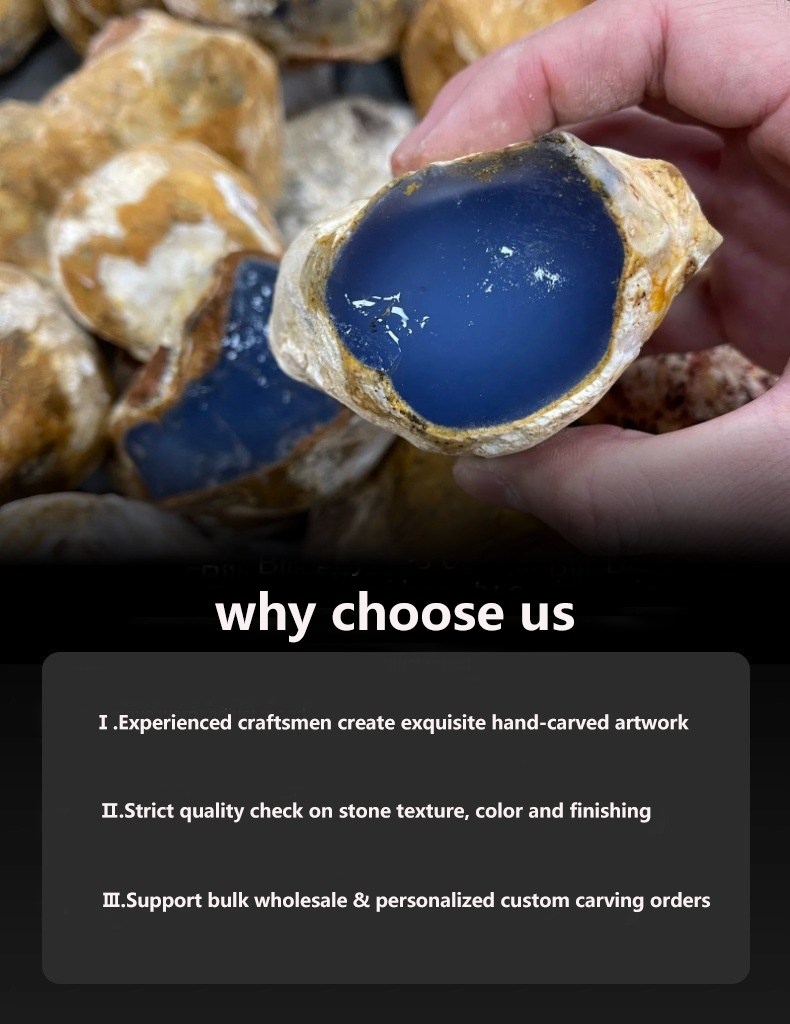
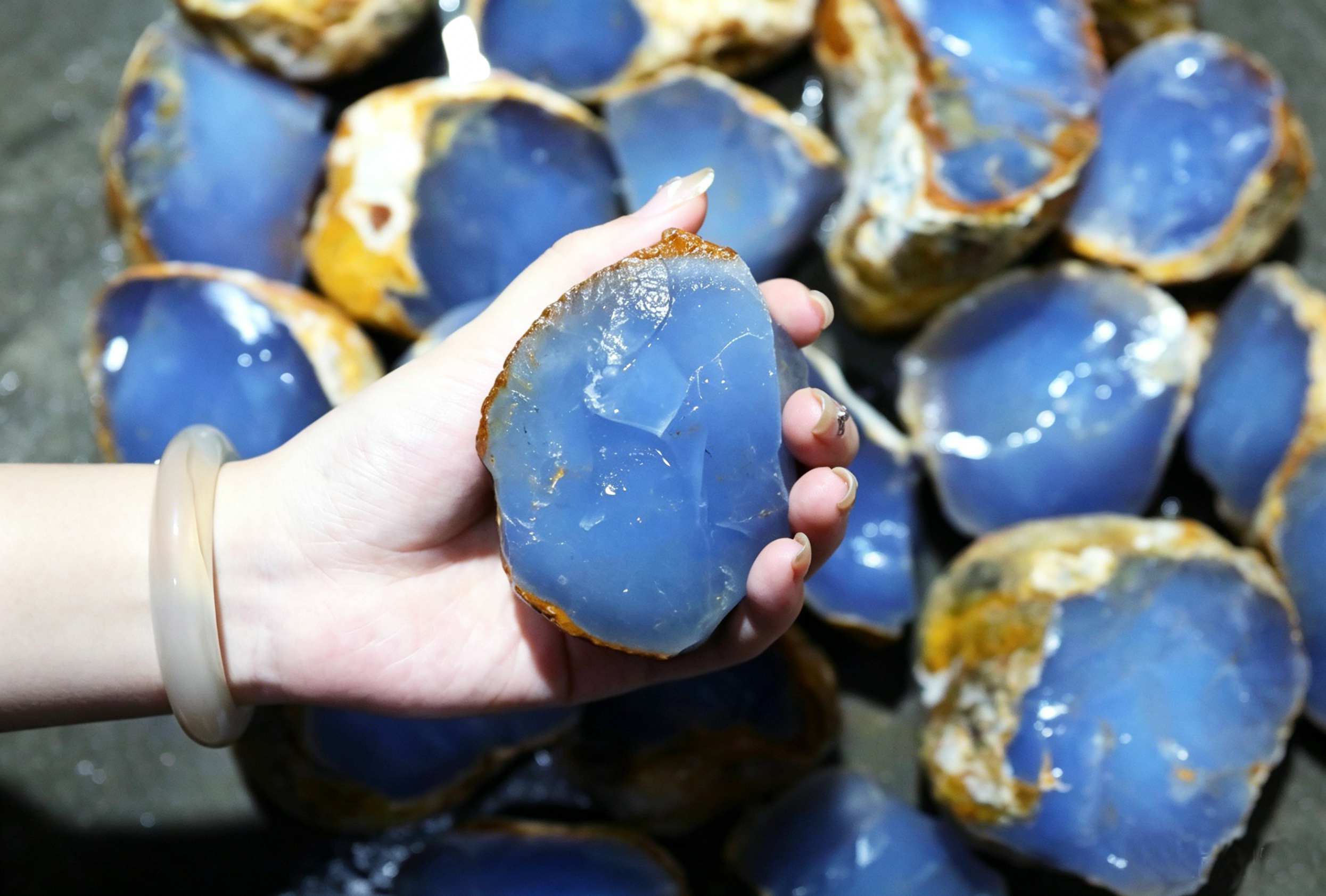
Blue chalcedony is the clearest winner. The global Chalcedony Jewelry market was valued at $1.666 billion in 2024** and is projected to reach **$2.892 billion by 2031 at an 8.2% CAGR. We‘ve seen a measurable uptick in blue chalcedony skull and carving orders over the past 12 months.
Corporate gifting is another bright spot. Companies are increasingly turning to custom crystal carvings — engraved skulls, branded paperweights, 3D laser-etched crystals — as premium corporate gifts. These orders tend to be larger, less price-sensitive, and more predictable than retail foot traffic.
Master-carved pieces are holding their value. While mass-produced items face price pressure, well-carved crystal skulls and art pieces continue to command premium pricing. The collectors and serious buyers haven’t gone anywhere.
The Factory Advantage
Here‘s the reality: when you’re a retailer buying through distributors, you‘re paying a 30–50% markup on top of factory pricing. When margins get tight, that markup is the first thing that hurts.
Going direct to the factory isn’t just about saving money — it‘s about surviving the squeeze. We offer sample orders, video verification of actual stock, and flexible MOQs for first-time B2B buyers. No middleman. No inflated prices. Just the stone, from the source.
The retailers who cut out the middleman are the ones who are still profitable in 2026.
The Bottom Line
Is the crystal industry dry? No.
Is it the same as it was in 2022? Also no.
The market has matured. The easy money from generic tumbles and basic clusters is gone. But the opportunities are still there — they’ve just moved.
Blue chalcedony is growing at 8.2% CAGR. Corporate gifting is expanding. Master-carved pieces are holding their value. The global crystal products market is still projected to hit $13.6 billion by 2035.
The retailers who adapt will thrive. The ones who don‘t? They’ll keep posting on Reddit about how the industry is dead.
We know which side of that line we‘re on.


 English
 Français
 عربي
عربي Deutsch