The Reddit Post That Explains the Opportunity
“Why do most Crystal stores talk about ethical sourcing?”
That question on r/Crystals sparked a longer discussion about what actually justifies a premium price. The consensus? Branding and transparency. Customers will pay more when they trust where the stone came from and who made it.
That’s the OEM opportunity in a nutshell. Private labelling lets you capture that premium — without owning a factory, without hiring carvers, without learning to cut stone.
But here‘s what most sourcing guides won’t tell you: the timeline from design to delivery is longer than you think. And every stage has its own hidden costs.
The Six Stages of an OEM Order
Stage 1: Design & Brief (3–7 days)
This is where you define what you‘re building. Material, size, finish, packaging, branding.
The more specific you are here, the fewer surprises later. A sketch helps. A 3D file is better. A reference photo with measurements is the minimum.
What can go wrong: Vague briefs lead to samples that miss the mark. Then you’re back to stage one, burning time.
Stage 2: Quoting & Sampling (10–21 days)
The factory reviews your specs and quotes a price. Then they cut a sample.
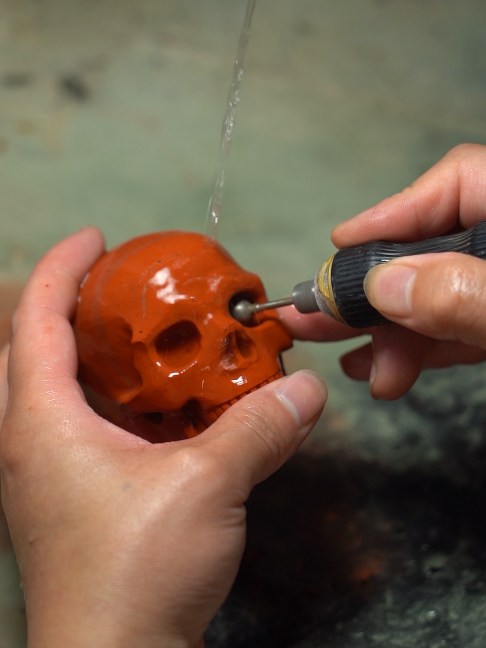
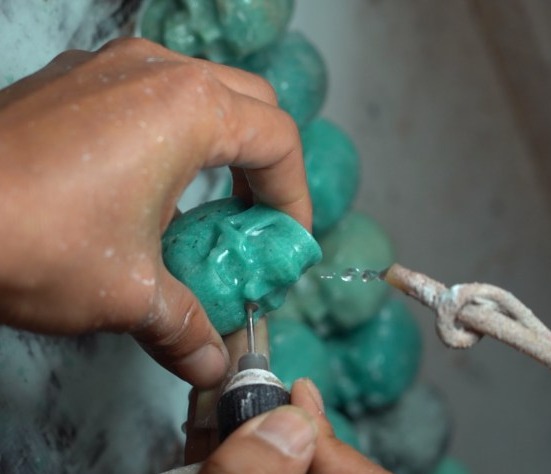
Sample timelines vary widely. Some factories deliver in 3–5 days. Others take a few weeks. For complex carvings, the sample alone can take 8–12 days for kilning and polishing.
The cost: Samples aren‘t free. Expect to pay for materials, labour, and shipping. Some factories refund the sample cost on your first bulk order. Many don’t.
What can go wrong: The sample looks nothing like the design. You request revisions. The revised sample takes another 10 days. You‘re now a month in and still don’t have a final product.
Stage 3: Sample Approval & Revisions (3–10 days)
You receive the sample. You inspect it. You either approve it or send it back with notes.
This stage is deceptively expensive. Every revision adds time. Every “just one more tweak” pushes your delivery date further out.
Smart move: Approve the sample in writing before production starts. Verbal approvals get forgotten. Written approvals create accountability.
Stage 4: Bulk Production (15–25 days)
Once the sample is approved, production begins. For standard OEM orders, most factories quote 15–25 days for bulk production. Some suppliers can deliver in 5–20 days depending on quantity. For larger or more complex orders, expect 2–4 weeks.
What affects the timeline:
-
Quantity — 50 pieces moves faster than 500
-
Complexity — engraving or special sizing can add 7–10 days
-
Material — some stones are harder to carve than others
-
Factory load — if they‘re running Christmas orders, your timeline stretches
Stage 5: Quality Control & Inspection (2–5 days)
Before shipping, reputable factories inspect every piece — or at least a statistically significant sample.
What they‘re checking:
What you should do: Request photo or video verification of the actual batch before it ships. One industry source notes that 15–30% of direct orders include some quality issues. A 5-minute video can save you weeks of dispute resolution.
Stage 6: Shipping & Delivery (7–30 days)
This is the most variable stage. Shipping times depend on your location, the shipping method, and the port.
These are transit times only. Add 2–5 days for customs clearance at each end.
The Complete Timeline: What to Expect
Why OEM Matters in 2026
The global crystal products market was valued at $8.9 billion in 2025 and is projected to reach $13.6 billion by 2035, growing at a 4.4% CAGR.
That‘s growth. But growth alone doesn’t build a brand. Differentiation does. And private labelling is how you differentiate without building a factory.
The r/Crystals discussion about ethical sourcing wasn‘t really about ethics. It was about trust. Customers trust brands that feel authentic. OEM lets you build that trust — with your logo, your story, your standards.
Skip the middleman. Build your line. Capture the premium.


 English
 Français
 عربي
عربي Deutsch