The Question That Started This Guide
"What is the future of the gemstone industry?"
That question on r/Gemstones sparked a discussion that went deeper than usual. It wasn't about retail trends or consumer preferences. It was about what actually works in the workshop — the yield, the workability, the real-world numbers that determine whether a rough stone becomes profitable or just becomes a headache.
As a lapidary, you already know the difference between a stone that sells and a stone that cuts well. The ideal rough sits at the intersection of high yield, reasonable hardness, and consistent demand.
Here are five rough gemstones worth your attention in 2026 — and the numbers that matter.
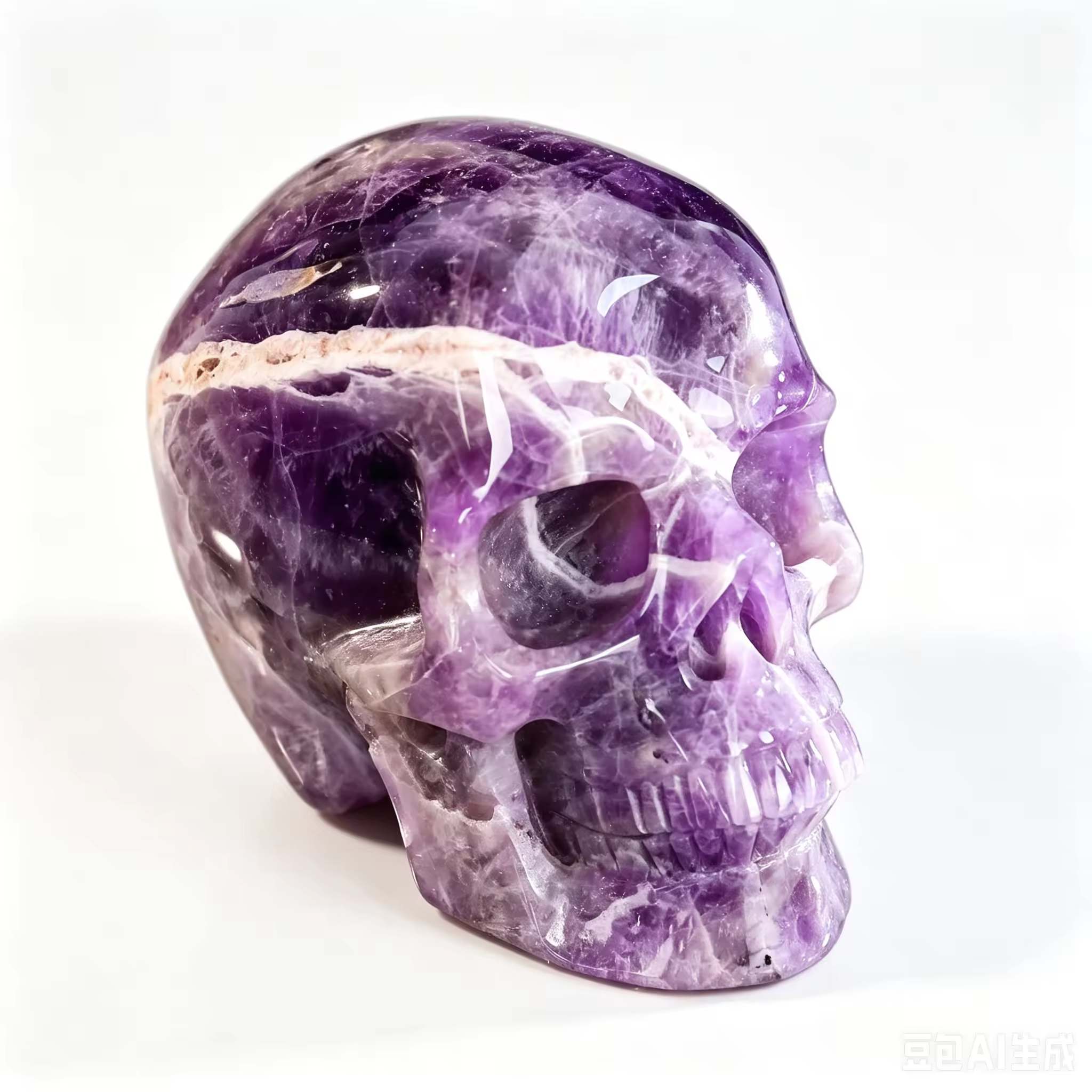
1. Amethyst (Brazilian)
Brazil remains the dominant player in commercial amethyst production, and for good reason.
Yield: 70–80% recovery on well-sourced material.
Hardness: 7 (Mohs) — comfortable to work with, takes a good polish, no special equipment needed.
Workability: Consistent color zoning makes it predictable for cabochons. The material is usually free of major fractures, with a low specific gravity of 2.65 (less dense, gives larger carat weight per piece).
Market demand: The global amethyst market is projected to grow from $1.45 billion in 2025 to $2.33 billion by 2034 at a CAGR of 5.4%. Commercial-grade material remains steady; collector-grade pockets command premiums.
2026 wholesale price: $18–$60 per kilogram for commercial-grade material.
The non-dyed, non-heated amethyst market is particularly strong. Demand for spiritual use continues to grow — and lapidaries who can supply clean, untreated material are capturing higher margins.
2. Rose Quartz (South Africa / Brazil)
Rose quartz is what we call the "bread and butter" stone. High turnover, consistent demand, and predictable cutting behaviour.
Yield: Up to 90% — excellent yield, minimal waste.
Hardness: 7 — straightforward cutting and polishing.
Workability: It has a greasy texture that polishes well. The material is affordable enough to experiment with, making it a favourite among apprentice lapidaries and established workshops alike.
Market demand: The global rose quartz market is expected to grow from $12.3 billion in 2024 to $23.5 billion by 2031 at a CAGR of 8.4%.
2026 wholesale price: $8–$30 per kilogram for rough, depending on quality.
The jewellery sector remains the primary consumer. Well-cut rose quartz cabochons consistently sell above the low-end synthetic market because the natural material has a depth and colour variation that synthetics can't replicate. Bulk availability makes it a volume-friendly option.
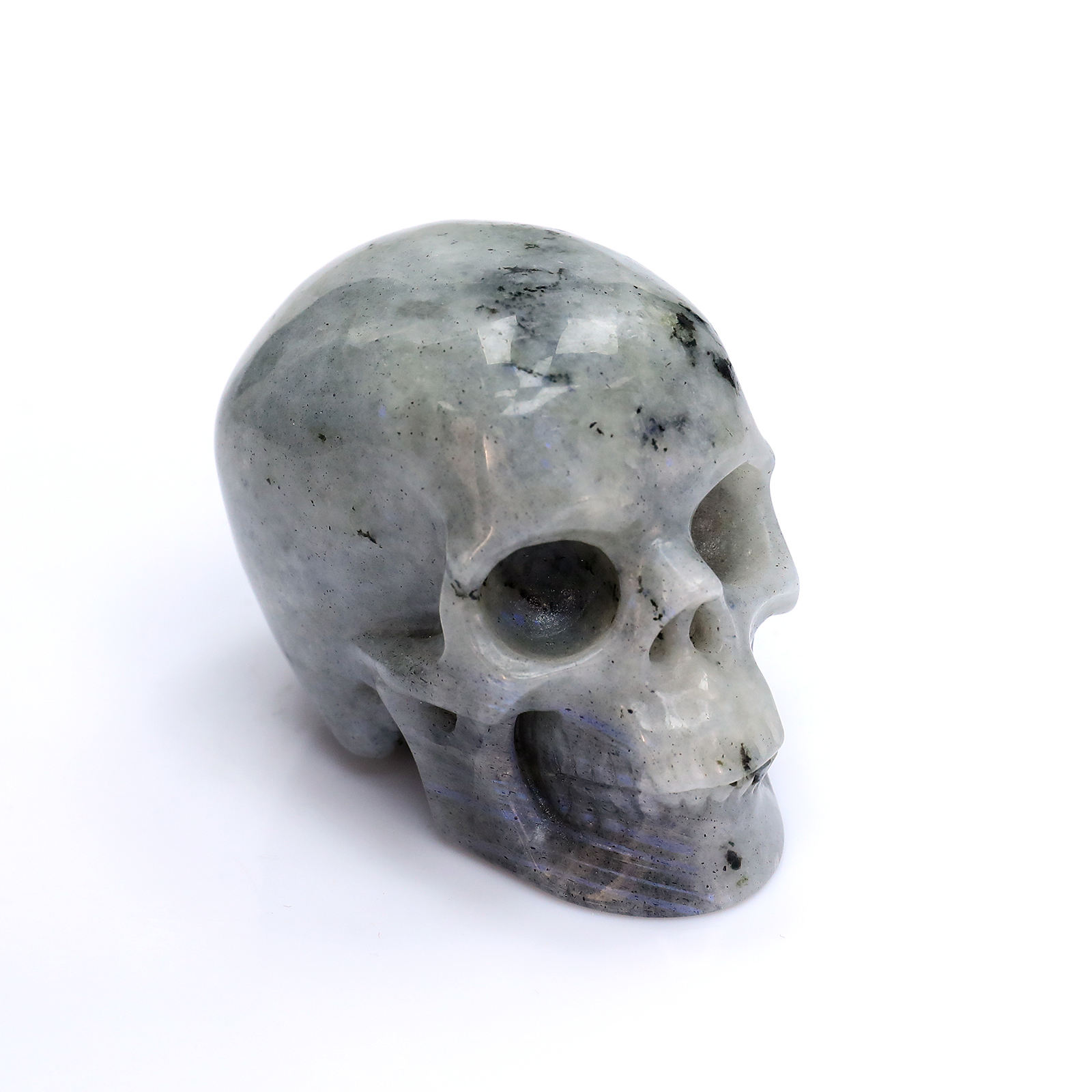
3. Labradorite (Madagascar / Canada)
Labradorite is a favourite among independent jewellery designers, and the demand is growing.
Yield: Highly variable — 50–70% depending on the rough. Madagascar material is known for its colour flash, but yields can be unpredictable.
Hardness: 6–6.5 — a bit softer than quartz, which means it's more prone to scratching during cutting. Requires careful handling.
Workability: The colour flash (labradorescence) only appears at specific angles, so cutting orientation is critical. A skilled lapidary can maximise the flash; a novice can cut it all away.
Market demand: The global labradorite market was valued at $56.12 million in 2025**, projected to reach **$98.4 million by 2035 at a CAGR of 6.1%.
2026 wholesale price: $4–$30 per kilogram, with premium spectrolite material commanding higher prices.
The gemstone's "mystical" appeal continues to drive consumer demand. Independent designers are the primary buyers, particularly for statement pieces and one-of-a-kind jewellery.
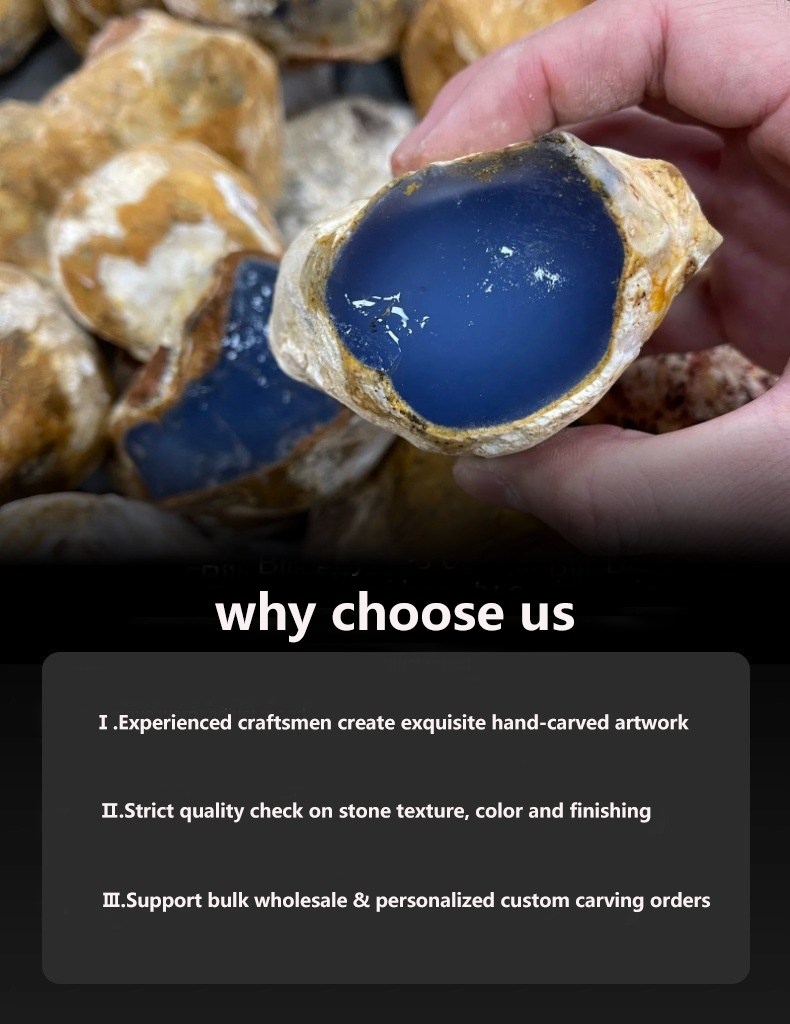
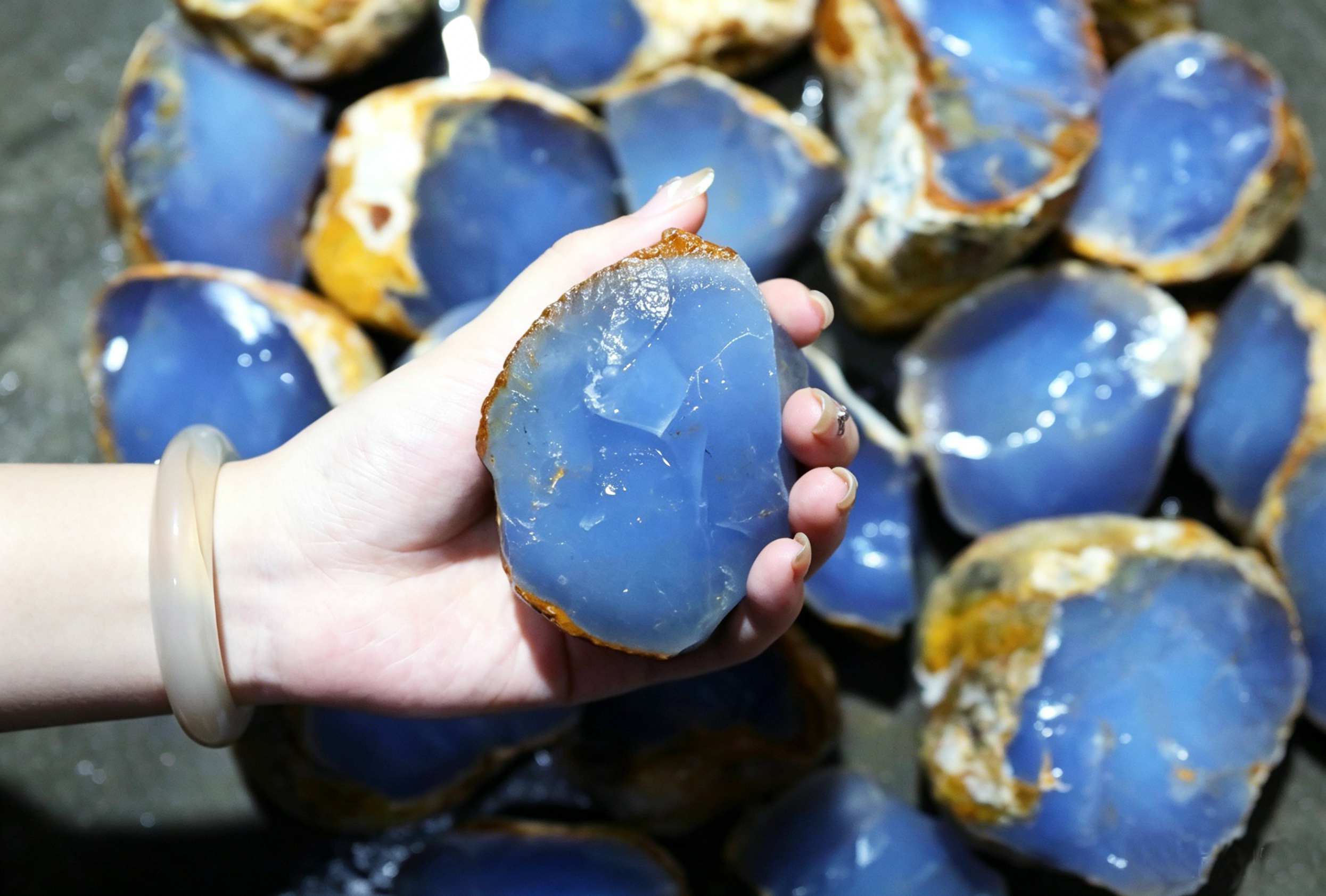
4. Blue Chalcedony (Turkey / USA)
Here’s where things get interesting. Blue chalcedony is the fastest-growing segment in this list.
Yield: Moderate — 50–70% recovery. The material has naturally occurring internal fractures that can reduce usable yield, which increases the effective cost.
Hardness: 6.5–7 — similar to quartz. Takes a good polish.
Workability: Its colour is naturally occurring, not treated. This is a significant value-add because the market pays a premium for untreated blue chalcedony. The stone's translucent, even colour is highly prized for cabs and carvings.
Market demand: The global Chalcedony Jewelry market was valued at $1.666 billion in 2024** and is projected to reach **$2.892 billion by 2031 at an 8.2% CAGR.
2026 wholesale price: $30–$110 per kilogram for rough — the highest on this list, reflecting both demand and the challenging yield.
The "untreated" quality is the key selling point. Dyed blue chalcedony from other sources sells for less, but discerning buyers pay a premium for the real material. For lapidaries who can source genuine Turkish or US material, this is the most profitable rough on the list on a per-kilo basis.
5. Clear Quartz (Brazil / Madagascar)
The workhorse of the rough stone trade. Clear quartz is never going to be a trend piece, but it’s never going out of style.
Yield: 60–80% depending on source. Madagascar material tends toward good clarity.
Hardness: 7 — predictable and forgiving.
Workability: It handles predictably on the grinding and polishing wheels. Its high availability and low price point make it the best training material for new lapidaries.
Market demand: The global Quartz market was valued at $23.2 billion in 2024** and is projected to reach **$34.6 billion by 2033 at a CAGR of 4.5%.
2026 wholesale price: $10–$50 per kilogram, with lower-grade commercial material available at the bottom end and collector-quality at the top.
It's the entry-level stone that teaches you how to cut — and it keeps paying the bills while you work on more interesting material. The demand base is broad and diversified. Buyers for crystal grids, meditation tools, and decorative ornaments are constantly replenishing their inventory. Premium clear, unbroken crystals command respectable prices.
Quick Reference Table
The Bottom Line
For 2026, the rough market is telling a clear story. Volume players should focus on clear quartz and rose quartz — predictable material, reliable margins, high turnover. Premium buyers should look at blue chalcedony, where the "untreated" premium continues to justify higher prices. Designer-oriented lapidaries should keep labradorite in their portfolio for its unique appeal.
The global crystal market is growing — from $8.9 billion in 2025 to $13.6 billion by 2035. But growth alone doesn't pay the bills. Picking the right rough for your workshop's specific strengths and customer base is what keeps your wheels turning.
If you want to get more information about our products, you can click crystalmanufacture.com.


 English
 Français
 عربي
عربي Deutsch