The crystal skull—once dismissed as a Victorian curio or a Hollywood prop—is quietly undergoing a transformation in the eyes of serious collectors. What was purely decorative is now being recognised as a legitimate asset class within the broader spiritual art and collectibles market.
For B2B buyers serving high-net-worth clients, museum curators, and serious spiritual art collectors, understanding this shift is no longer optional. This report examines the market data, pricing dynamics, and collector behaviour driving master-carved crystal skulls from ornament to investment.
1. From Mystery to Market: The Crystal Skull’s Evolution
Crystal skulls first appeared in European collections in the mid‑1800s. The most famous, the Mitchell‑Hedges skull, surfaced in the 1930s and was purchased at a London auction in 1943. For decades, these objects existed at the intersection of archaeology, mysticism, and curiosity.
Today, that landscape has changed. Modern makers produce crystal skulls in all sizes, and the market is actively growing. What was once a museum curiosity is now a commercial category with serious price tags—and serious collectors willing to pay them.
The shift is driven by three converging forces: the explosive growth of the healing economy, the expansion of the global collectibles market, and the rising appetite among high-net-worth individuals for tangible, meaningful assets.
2. The Market Context: Numbers That Matter
The Healing Economy
The broader wellness economy reached a record USD 6.8 trillion in 2025, representing 6.12% of global GDP. Within this, the spiritual and wellness products market—which includes crystals, meditation tools, and energy healing products—was valued at USD 11.3 billion in 2025 and is projected to reach USD 27.6 billion by 2033, growing at a CAGR of 12.2%.
The crystal segment is a significant driver. The global crystal healing market was valued at USD 1.06 billion in 2024 and is projected to reach USD 2.7 billion by 2033, a CAGR of 11.15%.
In the United States alone, the healing crystal industry was valued around USD 1.2 billion in 2020 and is projected to reach USD 1.8 billion by 2024, reflecting an approximately 8% CAGR. The broader U.S. metaphysical economy now encompasses over 120,000 businesses collectively generating USD 11.8 billion annually.
The Collectibles Market
The global collectibles market provides the second pillar of context. In 2024, the market was valued at USD 471 billion and is expected to reach USD 915 billion by 2031, growing at a CAGR of 9.69%.
Within this expanding universe, the antiques and collectibles market—where museum-grade crystal skulls sit—was valued at USD 150.2 billion in 2025 and is projected to reach USD 229.7 billion by 2035 at a CAGR of 4.4%.
High-Net-Worth Participation
High-net-worth individuals remain highly active in the fine art and collectibles market. In 2024 and 2025, 78% of respondents across 10 markets purchased at least one work of fine art in 2024, with 74% continuing to buy in the first half of 2025. This sustained participation signals that wealthy collectors are actively seeking alternative assets—and crystal skulls are increasingly on their radar.
3. Price Points: From Entry-Level to Museum Grade
The crystal skull market spans a dramatic price range, reflecting the vast gulf in quality, size, material, and craftsmanship.
Smaller crystal skulls start at around USD 150 for entry-level pieces. Mid‑range pieces—typically 2‑inch hand‑carved skulls in common materials like amethyst or rose quartz—retail in the USD 300–500 range.
At the premium tier, prices escalate rapidly. A hand‑carved 2.6‑inch fire agate skull commands USD 1,290. A life‑sized 7.5‑inch quartz replica of the Mitchell‑Hedges skull is listed at USD 8,990. An 8.5‑inch quartz crystal skull replica sells for USD 12,950.
Museum‑grade pieces represent the apex. A 28.1‑kg amethyst and rock crystal skull carved by Brazilian master artist Fábio is priced at USD 15,000. A 23‑kg amethyst skull by the same artist commands USD 29,000. The largest known crystal skull currently on the market has an asking price of USD 100,000–150,000.
The table below summarises the current pricing landscape:
4. What Makes a Master-Carved Skull an Asset
Not every crystal skull appreciates in value. The pieces that function as assets share several characteristics.
Perfect, flawless quartz crystal of sufficient size for life‑sized carving is remarkably expensive and nearly impossible to find. The rarer the crystal—whether it is fire agate, larimar, or high‑grade amethyst from specific Uruguayan deposits—the higher its potential value.
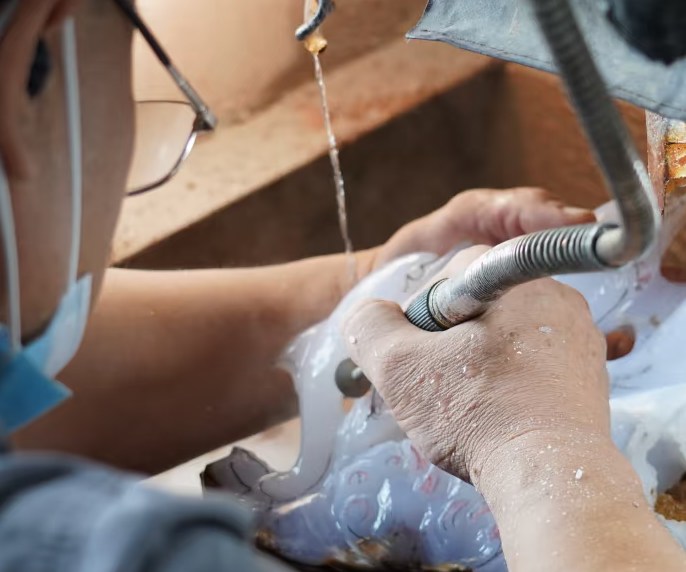
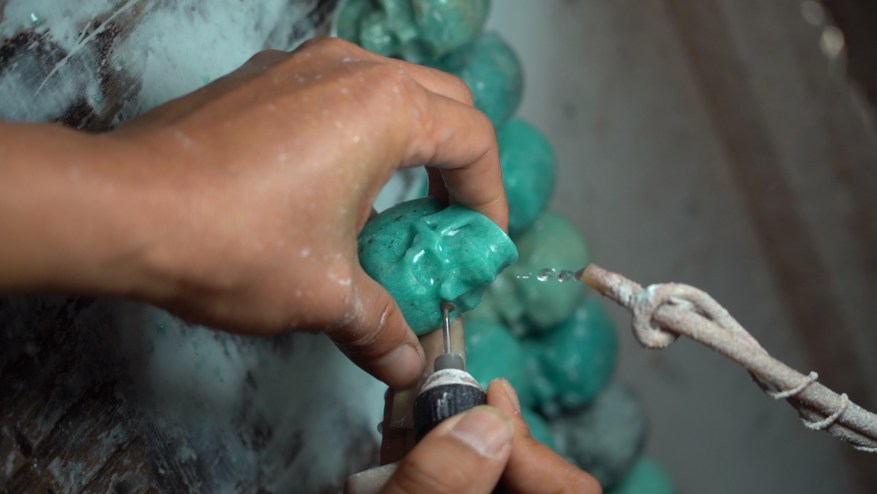
The distinction between machine‑assisted carving and master hand‑carving is critical. Brazilian artists Fábio and Leandro are widely regarded as among the world‘s top skull carvers. Pieces bearing their names command significant premiums. Each master‑carved skull represents days or weeks of skilled labour, working around the stone’s natural inclusions and fractures—a process no machine can replicate.
Provenance and Story
Collectors value not just the object but its narrative. The Mitchell‑Hedges skull, whether genuine or not, carries a legend that has driven its mystique for nearly a century. Modern master carvers are building their own reputations, and pieces with documented artist provenance increasingly attract premium bids.
Spiritual and Emotional Resonance
For many collectors, crystal skulls are not merely decorative—they are tools for meditation, energy work, and spiritual practice. This emotional dimension creates a different kind of value, one less susceptible to market volatility. As one observer notes, crystal skull carvings are valued for their “craftsmanship, individuality, and presence”.
5. The Collector’s Perspective: Why Now?
Several factors are converging to make this an opportune moment for master‑carved crystal skulls as an asset class.
The Wellness Wealth Effect
Wellness categories tend to hold up even in economic downturns. Surveys show consumers are “less likely to cut spending” on wellness—including spiritual goods—than on other discretionary items. This resilience makes wellness‑adjacent assets like crystal skulls relatively stable compared to purely decorative art.
The Shift from Diamonds to Coloured Stones
MarkWide Research notes a “shift away from diamond‑centric portfolios toward ruby/sapphire/emerald as alternative stores of value”. This same logic applies to rare carved crystals: collectors are seeking tangible, portable, and aesthetically compelling stores of value beyond traditional gems.
Social Media Amplification
The North American market for collector and healing stones is now described by industry analysts as a “multi‑billion‑dollar” business, driven by social media and wellness trends. Platforms like TikTok and Instagram have introduced crystal skulls to a new generation of collectors, expanding the demand base.
6. Implications for B2B Buyers
For wholesalers and retailers serving the high‑end crystal market, the data points to clear strategic priorities.
First, differentiate by tier. The entry‑level market is crowded and price‑sensitive. The premium and museum‑grade segments, by contrast, offer higher margins and more discerning buyers who value quality over cost.
Second, invest in provenance. Documentation of the carver‘s identity, the material’s origin, and the piece‘s creation process adds tangible value. European and North American buyers increasingly demand this transparency.
Third, understand the collector’s motivation. High‑end clients are not buying decoration—they are acquiring meaning, rarity, and investment potential. Framing crystal skulls as assets rather than ornaments shifts the conversation from price to value.
Fourth, watch the master carvers. Artists like Fábio and Leandro are building brand equity that translates directly into price premiums. Sourcing from recognised masters—or building relationships with emerging talents—positions your inventory for appreciation.
7. Outlook
The crystal skull is no longer a curiosity. It is a category.
With the global collectibles market expanding at nearly 10% CAGR, the healing economy surpassing USD 6.8 trillion, and high‑net‑worth individuals continuing to acquire tangible assets, master‑carved crystal skulls sit at a unique intersection of art, spirituality, and investment.
For B2B buyers who recognise this shift, the opportunity is clear: the pieces that were once merely decorative are now becoming assets. And the collectors who understand this are buying accordingly.


 English
 Français
 عربي
عربي Deutsch