— Three factory-floor tests that separate real crystal from resin and glass
The Problem Is Getting Worse
“I want to start buying gems and crystals but don’t want to be scammed with Resin or glass.”
That post on r/Crystals racked up over 400 upvotes. Scroll through the subreddit and you’ll find dozens of similar threads — buyers posting photos of their “crystal” skulls, asking the community to confirm what they already suspect.
The fraud is widespread. Some crystal merchants sell glass as natural crystal, with one consumer reporting paying over 1,000 yuan for a bracelet that turned out to be glass worth less than 100 yuan. Others use dyeing, acid washing, and splicing to pass off low-grade stones as premium varieties.
Here’s the thing: most online guides tell you to “look at the color” or “feel the temperature.” Those tests are unreliable — temperature varies with the weather, and dyed stones can look perfectly natural to an untrained eye.
We manufacture crystal carvings. We see the fakes every day. Here are three tests that actually work.
Test 1: The Cut Surface
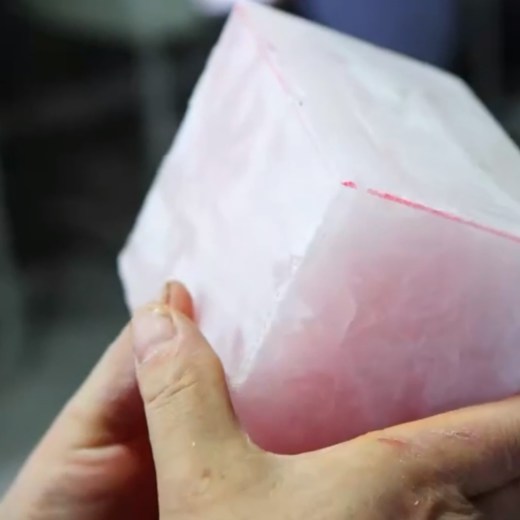
What to look for: A genuine crystal skull or carving has subtle, uneven tool marks on its cut surfaces — especially on the bottom or back where less polishing has been done.
Why this matters: Resin and glass are cast in molds. Molded pieces have smooth, uniform surfaces all over because they never go through a cutting process — they’re formed in one piece. Natural crystal, on the other hand, is cut and ground from rough stone. Even with heavy polishing, you’ll find tiny variations — a slightly wavy line here, an inconsistent edge there.
What the factory knows: We cut hundreds of skulls a week. Every single one leaves the cutting wheel with distinct marks. If a piece is perfectly smooth everywhere — no variation, no tool traces — it didn’t come from a block of stone. It came from a mold.
Test 2: The Internal Texture
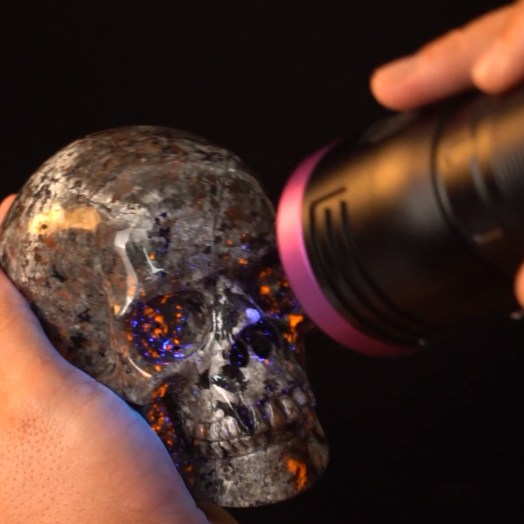
What to look for: Use your phone’s flashlight. Shine it through the piece and look closely — a magnifying glass helps.
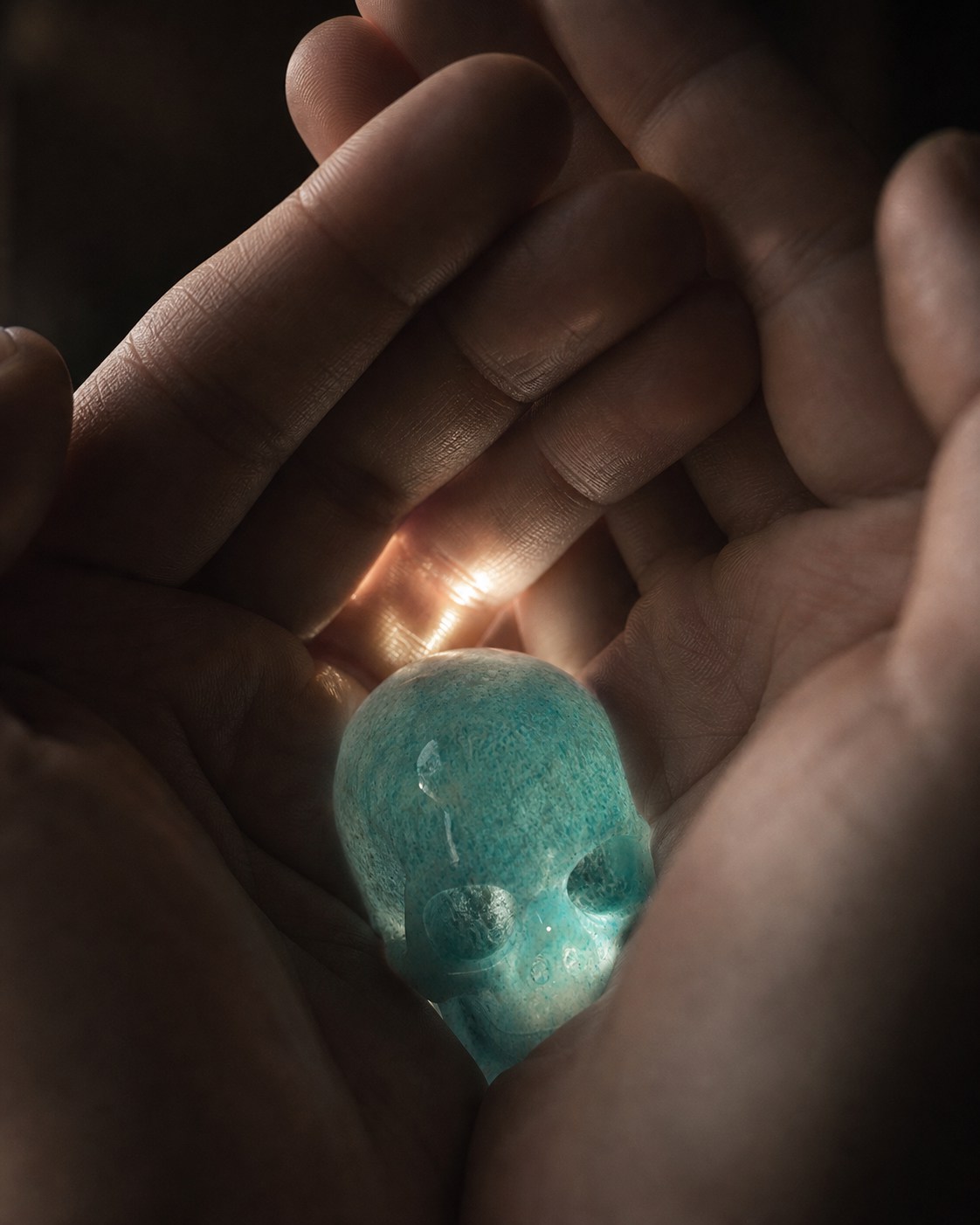
Natural crystal: You’ll see inclusions — tiny cracks, fibrous layers, cloudy patches, or angular mineral deposits. These are natural features that formed over millions of years. Crystal inclusions are always angular or irregular in shape.
Glass or resin: You’ll see perfectly round air bubbles. That’s the giveaway. When liquid glass or resin is poured into a mold and cools, trapped air forms spherical bubbles. Natural crystal doesn’t form round bubbles — its inclusions are jagged, crystalline, or needle-like.
What the factory knows: We reject rough stones with too many inclusions. But we also know that some inclusions are the only thing proving a piece is real. A completely flawless crystal at a cheap price is a red flag, not a bargain.
Test 3: The Weight
What to look for: Hold the piece in your hand. Does it feel substantial for its size? Or does it feel surprisingly light?
The numbers: Genuine quartz crystal has a specific gravity of about 2.65 — it’s dense. Glass typically ranges from 2.4 to 2.7, so the weight can overlap. But resin is the real giveaway — epoxy resin has a specific gravity of only 1.8 to 2.0.
A resin skull of the same size as a crystal skull can weigh 30–40% less. That’s not subtle — you can feel it.
Here’s a quick reference:
What the factory knows: We buy rough stone by the kilogram. Weight is how we price raw material. When a finished piece feels too light for its size, we know something’s off before we even look at it.
One More Thing: The Price Test
This isn’t a scientific test, but it’s the one that catches most buyers.
A 2.5–3.5cm clear quartz skull wholesales for around $95. A 3.7-inch obsidian skull goes for about $23. Larger amethyst clusters sell by the kilogram, with Brazilian material typically around €21.90/kg wholesale.
If you’re paying $15 for a “natural crystal skull” the size of your fist, you’re not getting a deal. You’re getting resin. Legitimate suppliers offer samples before bulk orders. If a seller pushes you to buy without showing you the actual piece first, that’s a warning sign.
The global crystal products market was valued at $6.1 billion in 2025 and is projected to reach $8.4 billion by 2035. That kind of growth attracts bad actors. But with these three tests — cut surface, internal texture, and weight — you can spot the fakes before they end up on your shelf.


 English
 Français
 عربي
عربي Deutsch