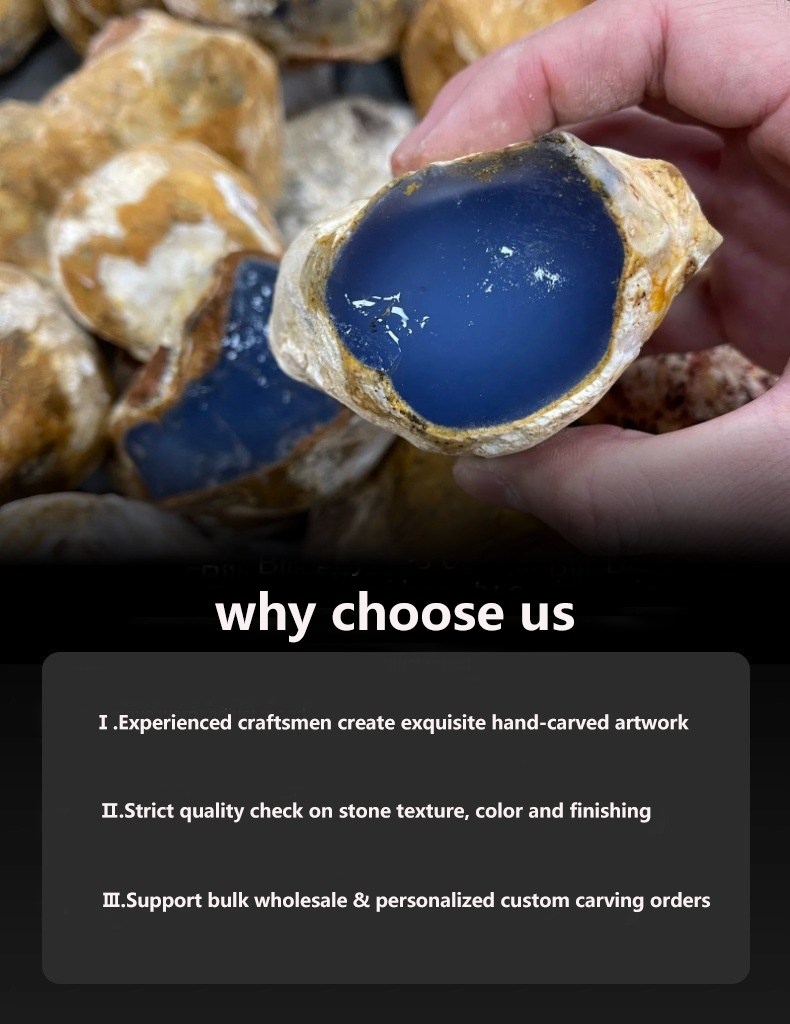
Blue Chalcedony Price Per Kg: Wholesale vs. Retail – What You Should Really Pay in 2026
If you’re shopping for blue chalcedony rough—whether for lapidary work, jewelry making, or resale—the price per kilogram is probably top of mind. And honestly? It can vary like crazy. One day you’ll see a bargain, the next day you’re scratching your head wondering why two rocks that look similar have totally different price tags.
In this post, I’ll walk you through real-world blue chalcedony prices for 2026. We’ll talk wholesale vs. retail, what drives costs up (or down), and how to make sure you’re not overpaying. And when you’re ready to buy, feel free to check out our factory-direct wholesale blue chalcedony rough.
Current Blue Chalcedony Price Per Kg (2026)
All prices below are for natural blue chalcedony—no dye, no heat treatment, nothing fake. Figures are in USD.
| Grade |
Retail Price (1–5 kg) |
Wholesale Price (50 kg+) |
| Entry level (opaque, light color) |
$30-40/kg |
$21–28/kg |
| Standard (semi-translucent, even blue) |
$100–120/kg |
$70–84/kg |
| Premium (translucent, deep sky blue) |
$200–250/kg |
$140–175/kg |
| AAA / Jewelry Grade (high translucency) |
$300–350/kg |
$210–245/kg |
Why Blue Chalcedony Prices Vary So Much
Let’s be real—not all blue chalcedony is created equal. Here’s what actually moves the needle on price.
1. Where It Comes From
Turkish blue chalcedony almost always costs more. The color is consistent, the translucency is reliable, and people trust it. On the other hand, material from Madagascar or Namibia tends to be more budget-friendly. We source from both regions, so you’ve got options whether you’re watching your wallet or chasing top-tier color.
2. Color Saturation
Deeper blues, especially ones that stay even across the stone without gray or brown patches, drive the price up fast. The really good stuff has that “robin’s egg” or “lake blue” look—calm, clean, and even.
3. Fractures and Inclusions
Clean rough means less waste. If a piece has fewer cracks and inclusions, expect to pay around 30–50% more. But for serious cutting work, it’s usually worth it.
4. How Much You Buy
Retail buyers pay a premium—no way around it. But jump up to wholesale quantities (50 kg or more), and the price per kg can drop by 40–60%. That’s why a lot of lapidary artists buy in bulk once they know what they want.
Wholesale vs. Retail – Which One Makes Sense for You?
Go retail if:
-
You’re a hobbyist just testing the material
-
You buy less than 5 kg per year
-
You need a small shipment delivered quickly
Go wholesale if:
-
You run a jewelry business
-
You teach lapidary classes
-
You cut more than 20 cabochons a month
Seriously, the savings on blue chalcedony rough alone can cover the cost of new equipment in one order.
How to Avoid Overpaying for Blue Chalcedony Rough
A few hard-won lessons from years of buying and selling:
❌ Avoid “mystery bags.” You should always see real photos of the actual rough you’re getting.
❌ Watch out for dyed agate being sold as natural blue chalcedony. A quick acetone test on a small chip can sometimes reveal the truth.
✅ Ask for the price per kg in writing before you place an order.
✅ Request a small sample (1–2 kg) before committing to a wholesale buy.
Our Wholesale Blue Chalcedony Rough Pricing
Because we source directly, our prices usually run 20–30% below market average. Everything is hand-graded and photographed.
-
Sample pack (2 kg mixed grade): $25 + shipping
-
Wholesale standard (50 kg): $11/kg
-
Wholesale premium (100 kg+): $9/kg
[View our full blue chalcedony rough collection →]
Frequently Asked Questions
Q: Is blue chalcedony expensive compared to other rough gemstones?
A: Not really. It’s mid-range—less than jade or turquoise, but more than common quartz. Most of the value comes from color and how translucent the stone is.
Q: Does the price per kg include shipping?
A: No, shipping is separate. For wholesale orders, we offer discounted freight (sea or air options available).
Q: Any discounts beyond 100 kg?
A: Yes. If you’re looking at 500 kg+ container orders, just contact us for a custom price.


 English
 Français
 عربي
عربي Deutsch