Executive Summary
The North American and European markets for carved semi‑precious stones—especially blue chalcedony and amethyst—are expanding on solid, measurable foundations. For B2B buyers, understanding the distinct growth rates, pricing structures, and consumer drivers of each material is the key to smart sourcing and product positioning.
This report synthesises recent market data, regional demand signals, and practical procurement intelligence to help you decide what to stock, where to sell, and how to buy.
The North American and European markets for carved semi‑precious stones—especially blue chalcedony and amethyst—are expanding on solid, measurable foundations. For B2B buyers, understanding the distinct growth rates, pricing structures, and consumer drivers of each material is the key to smart sourcing and product positioning.
This report synthesises recent market data, regional demand signals, and practical procurement intelligence to help you decide what to stock, where to sell, and how to buy.
1.The Big Picture: Global Crystal Products
The overall crystal products market sets the stage. In 2025, the global market is valued at $6.1 billion, with a projected rise to $8.4 billion by 2035 — a steady compound annual growth rate (CAGR) of 3.3% (Future Market Insights).
Within this broad category, the chalcedony jewellery segment (which includes carved and polished pieces) is growing significantly faster than the average, making it a standout opportunity for B2B buyers.
Market Size and Growth
The global chalcedony jewellery market was worth $1.666 billion in 2024. By 2031, it is expected to reach $2.892 billion, representing a CAGR of 8.2% (QYResearch). The chalcedony earrings sub‑segment alone—often featuring carved or faceted stones—is valued at $4.4 billion in 2025 and projected to hit $7.8 billion by 2032 (Research and Markets), with some estimates pointing to an even stronger 8.99% CAGR.
Production and Pricing
- Global production of chalcedony jewellery reached roughly 8 million units in 2024.
- The average wholesale price across all chalcedony pieces hovers around $200 per unit.
- For importers, gross profit margins in this segment typically range from 50% to 70% — a highly attractive spread.
- In the U.S. wholesale market, simpler carved or tumbled pieces sell for $0.50–$3.50 per unit, while premium carved sculptures or designer items command $3.50–$10.50+ per unit.
Why B2B Buyers Are Watching
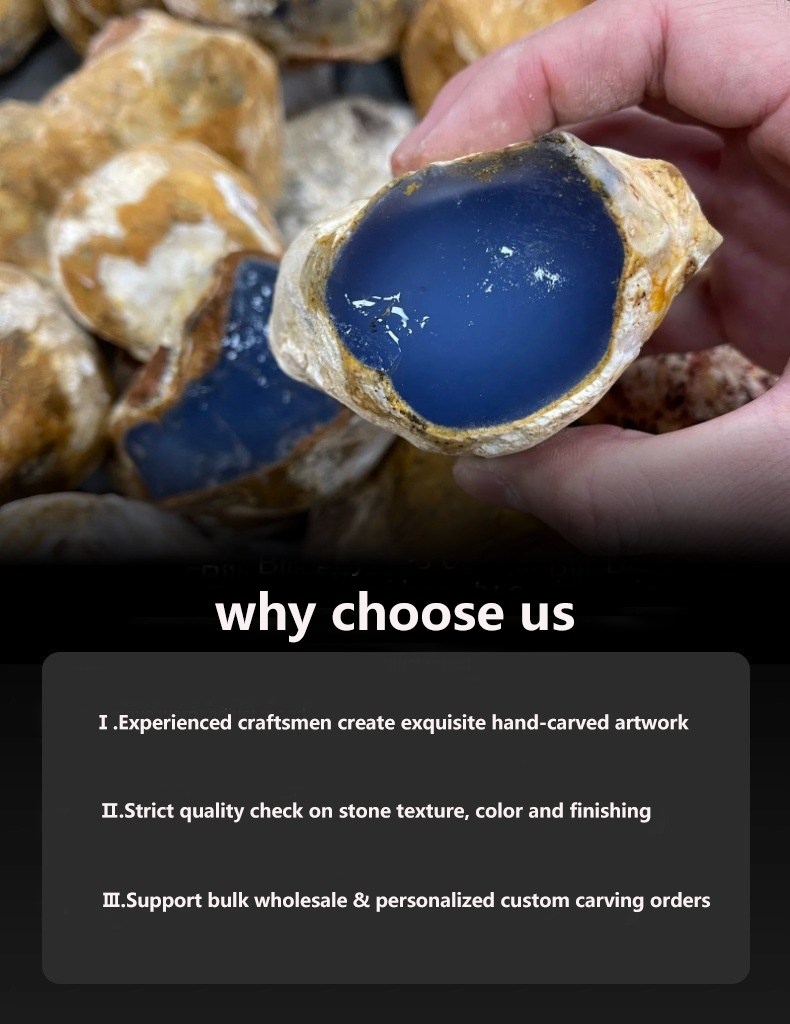
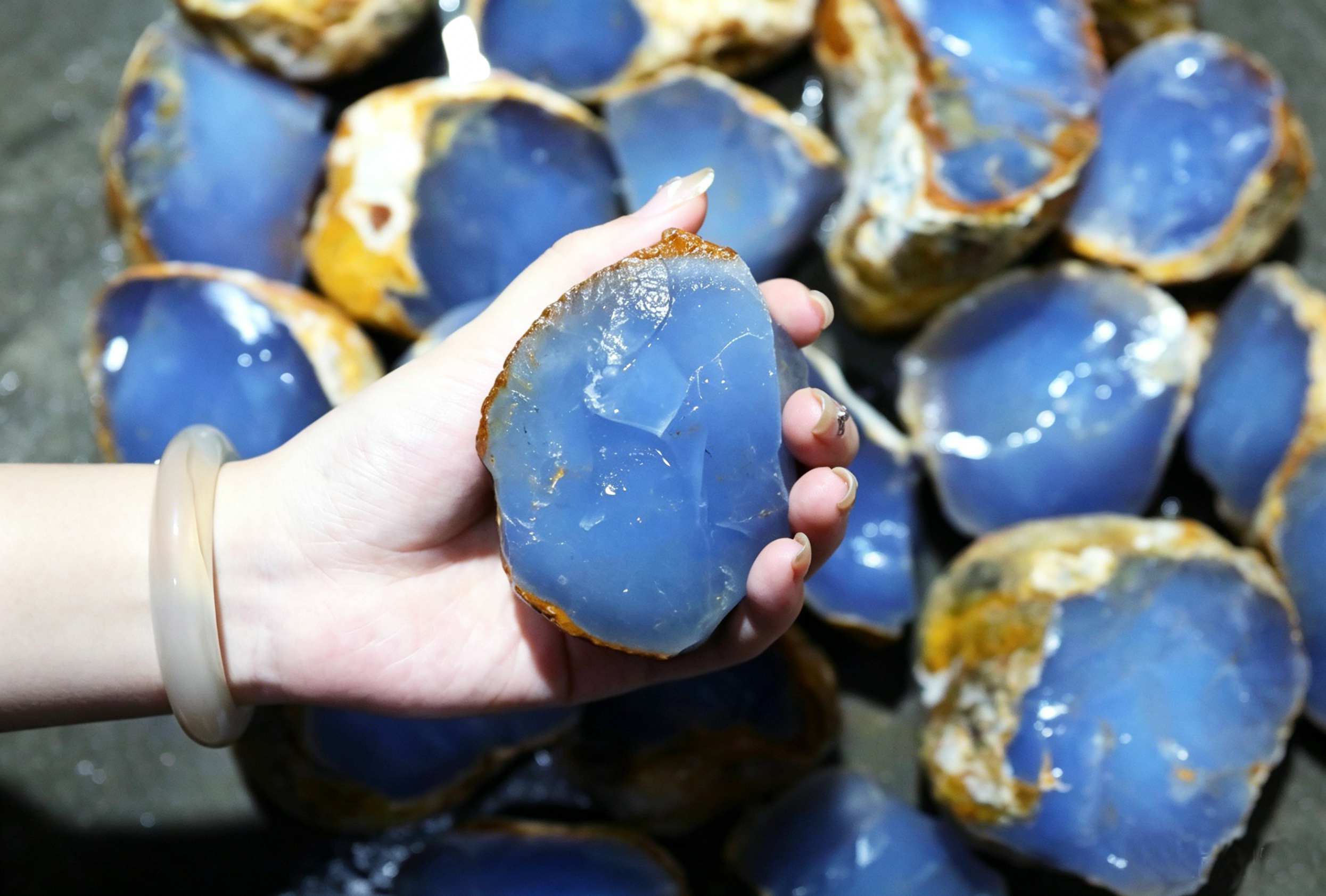
Blue chalcedony’s distinctive soft blue translucence, combined with its toughness (Mohs hardness 7), makes it ideal for intricate carving—skulls, animals, and ornamental objects. Its association with calm communication resonates with wellness‑oriented consumers, a demographic that continues to expand in both North America and Europe.
Market Size and Growth
Amethyst enjoys broader recognition and a larger installed consumer base, though its growth is more moderate.
- The global amethyst market was estimated at roughly $1.5 billion in 2023 and is forecast to reach ~$2.1 billion by 2029 (CAGR ~5.5%).
- More recent data for 2025 puts the market at $1.119 billion, with a projected $1.540 billion by 2033 — a CAGR of 4.08% (Maia Research).
Pricing Dynamics
Pricing varies widely by quality: medium‑colour faceted stones: $10–$30 per carat. Top‑grade specimens (deep colour, high clarity, notable origin): over $100 per carat.
Consumer Appeal
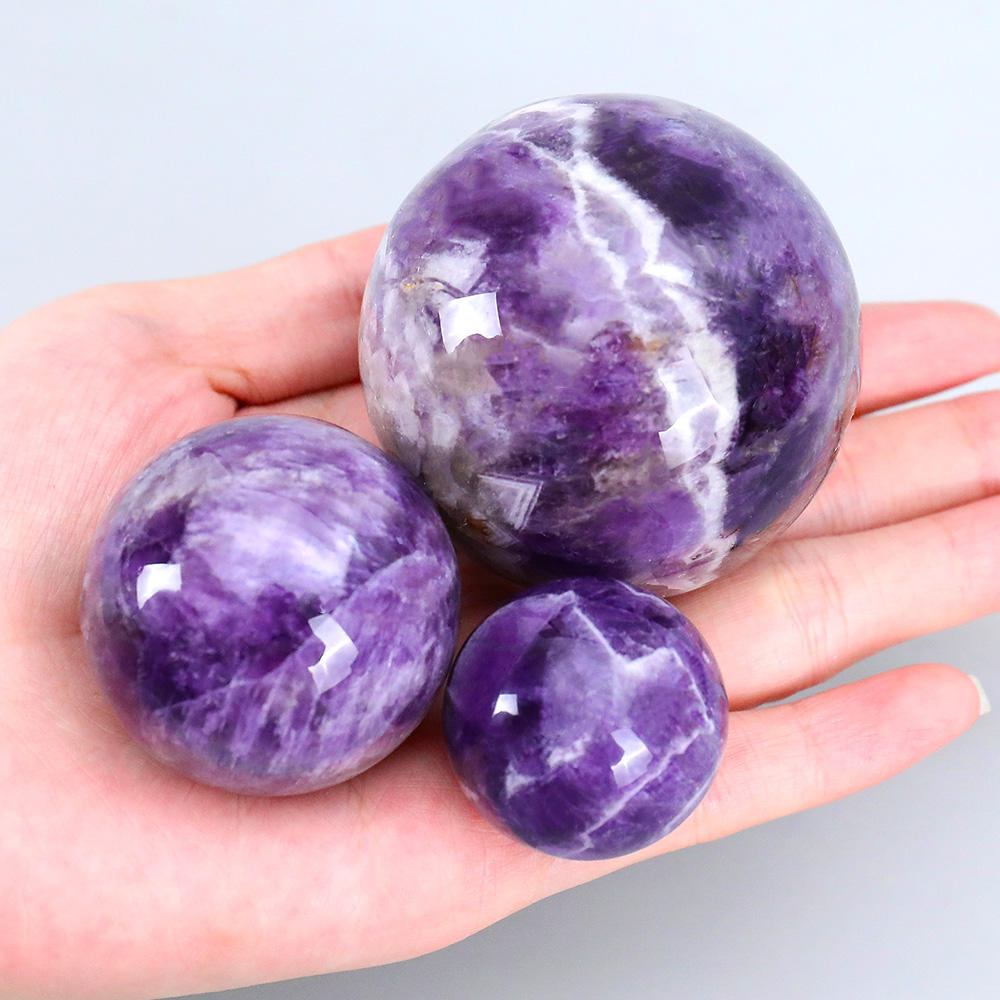
Amethyst remains the best‑selling healing crystal in Western markets. Its deep purple colour and long‑established spiritual associations (stress relief, meditation, protection) keep retail demand consistently high—especially for clusters, geodes, and carved points.
4.Regional Deep‑Dive: North America and Europe
North America – The Dominant Force
- The U.S. healing‑crystal industry alone grew from ~$1.2 billion in 2020 to ~$1.8 billion in 2024, a CAGR of about 8%.
- The broader U.S. “metaphysical economy” now encompasses over 120,000 businesses, generating $11.8 billion annually—roughly half the size of the U.S. yoga industry.
- North America is the largest regional market for chalcedony earrings and carved crystals, and it continues to drive global trends.
- U.S. retailers expect reliable replenishment, wholesale‑ready packaging (pre‑sorted, pre‑labelled), tiered pricing, and clear sourcing provenance.
Europe – The Second Pillar
- Europe ranks as the second‑largest market for crystal products worldwide.
- In countries like Sweden, Germany, and the UK, demand is fuelled by mindfulness culture, sustainable living, and a strong preference for ethical sourcing.
- Nordic buyers, in particular, require detailed documentation on mine origin, processing methods, and environmental impact.
- Crystal carvings are increasingly featured in high‑end interior design—from amethyst geodes as statement pieces to carved decorative objects for luxury homes.
| Factor |
Blue Chalcedony |
Amethyst |
| Global market value (recent) |
$1.666B (2024, jewellery segment) |
$1.119B (2025, total market) |
| Projected CAGR |
8.2% (through 2031) |
4.08% (through 2033) |
| Primary Western demand drivers |
Unique colour, carving potential, calming energy |
Wide recognition, meditation, stress relief |
| Typical wholesale price |
$0.50–$10.50+/unit (carved items) |
$10–$100+/carat (faceted stones) |
| Gross margin for buyers |
50%–70% |
50%–70% (similar range) |
| Regional strength |
Strong in U.S. and Europe, rising |
Global, with U.S. and Europe leading |
| Best‑selling forms |
Carved skulls, animals, cabochons, beads |
Clusters, geodes, points, carved figurines |
5.Top‑Selling Product Categories in Western Markets
Based on current U.S. and European retail data, these carved
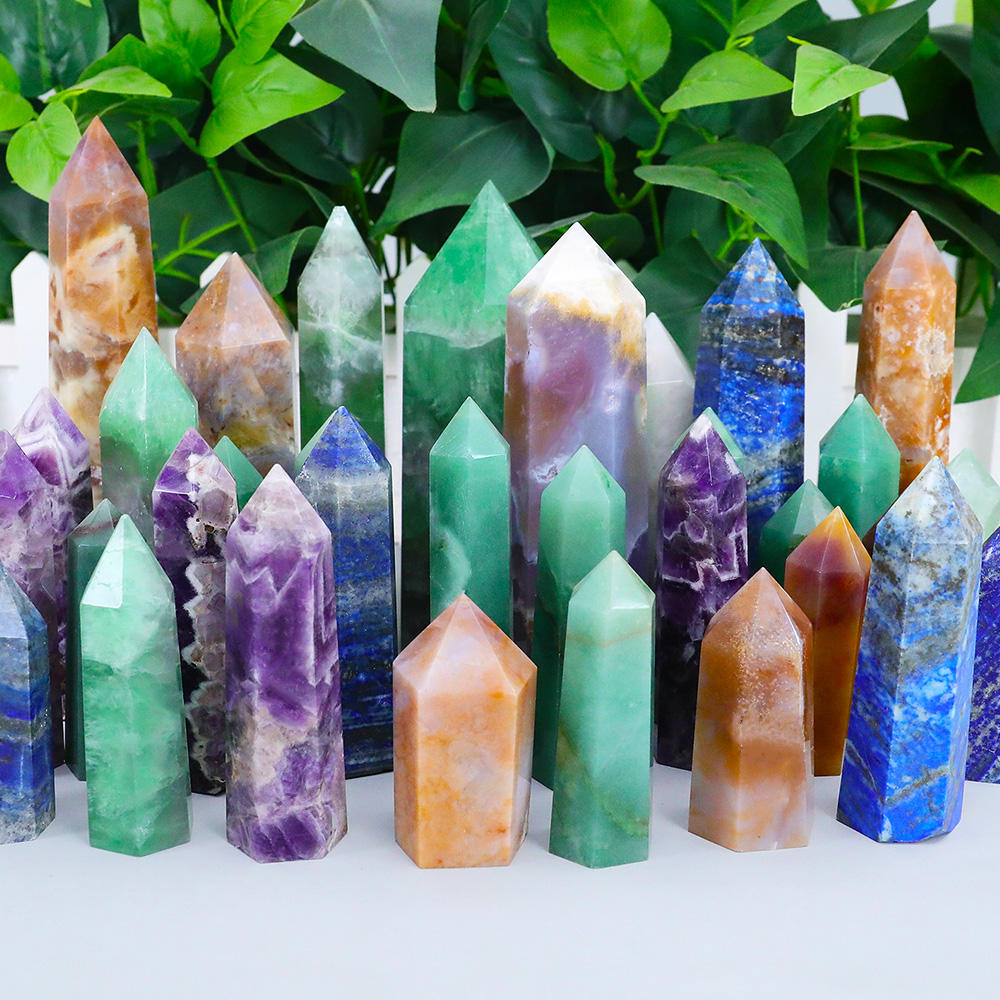
crystal categories generate the highest turnover:
- Amethyst clusters, geodes, and points – perennial best‑sellers, used for home decor and spiritual practice.
- Rose quartz carvings – strong in self‑care and emotional‑healing segments.
- Clear quartz points and clusters – versatile “energy amplifiers” with steady demand.
- Citrine carvings and prosperity kits – popular for business gifts and wealth‑attraction themes.
- Blue chalcedony carvings – the fastest‑growing sub‑category, driven by its unique aesthetic and calming properties.
6.What Western Retailers Expect from Wholesalers
From conversations with U.S. and European importers, the following criteria are non‑negotiable:
- Supply reliability – consistent fulfilment of repeat orders, especially for high‑volume items like amethyst clusters.
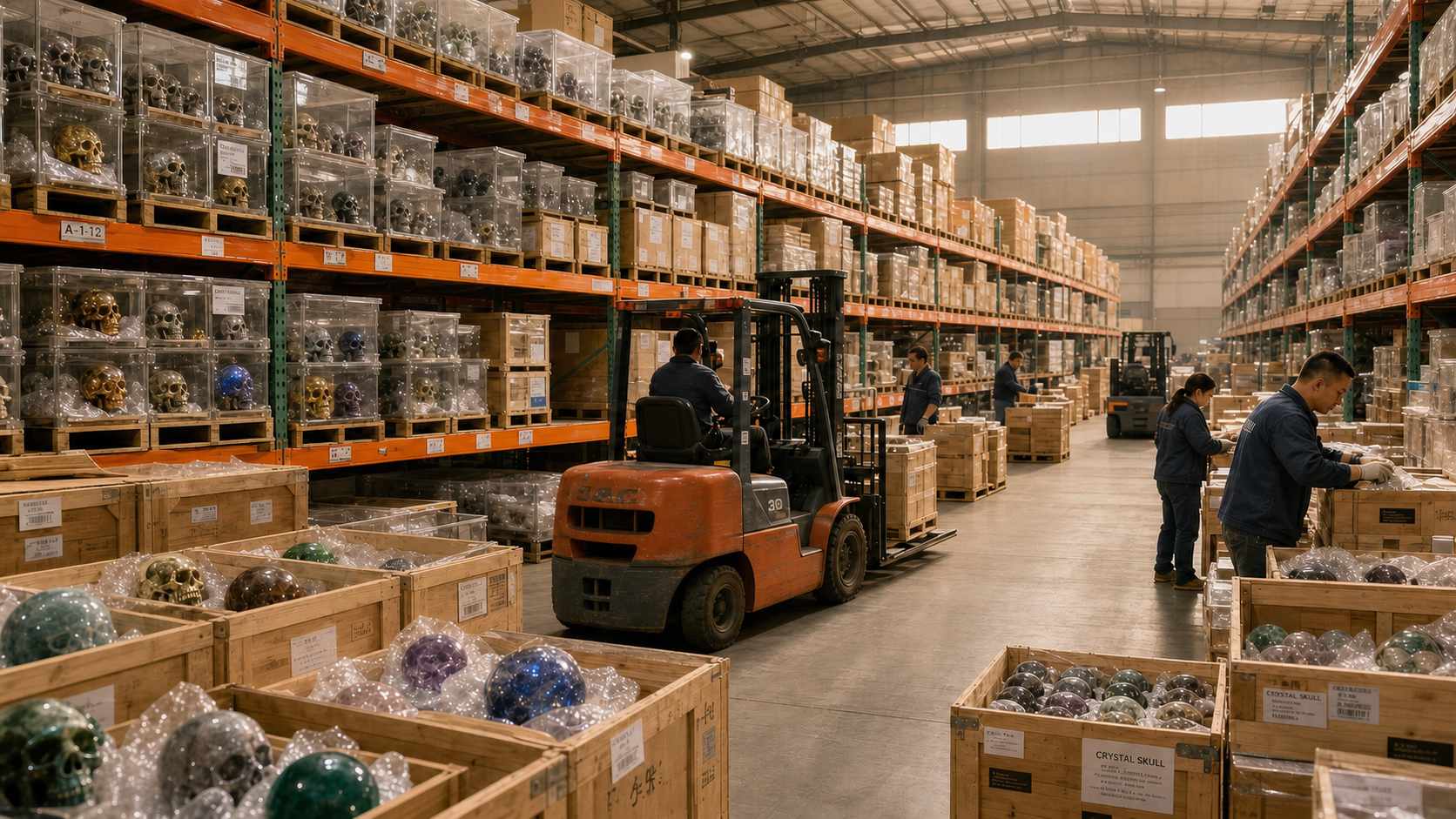
- Packaging ready for retail – stones cleaned, uniformly sized, sorted, and packaged with labels that include metaphysical properties (a major selling point).
- Competitive pricing structures – volume discounts, mix‑and‑match options, and flexible MOQs.
- Full transparency – documentation of mine origin, ethical mining claims, or third‑party certifications (e.g., Fair Trade, Responsible Jewellery Council).
- Customisation capability – bespoke carvings, limited editions, and private‑label packaging command premium prices and build long‑term partnerships.
7.Strategic Takeaways for B2B Buyers
- Blue chalcedony offers the higher growth potential (8.2% CAGR) and a point of differentiation. Its carving‑friendly nature and rising consumer interest make it ideal for buyers looking to stand out.
- Amethyst provides stable, high‑volume revenue with a massive installed customer base. It should anchor any crystal product portfolio.
- North America remains the primary target, but Europe offers equally premium opportunities—provided you can document ethical sourcing.
- Tariff watch: The 2025 U.S. tariff adjustments (the “reciprocal tariff” policy) introduce volatility; consider diversifying your distribution channels or warehousing outside the U.S. to mitigate risk.
- Don’t underestimate packaging and storytelling – Western buyers pay a premium for stones that come with a clear narrative (origin, meaning, care instructions).
8.Outlook
The crystal carving market is not a passing trend. With the global spiritual‑wellness sector projected to exceed $210 billion by 2025, and crystal‑infused products capturing a growing share, B2B buyers who act now on the right material mix—balancing chalcedony’s growth with amethyst’s stability—will be well positioned for the next decade of Western demand.
Data compiled from QYResearch, Research and Markets, Future Market Insights, and industry trade analyses (2024–2025). All figures are market estimates at the time of writing.


 English
 Français
 عربي
عربي Deutsch